When an emergency occurs in a public building, the risk environment is significantly different from that of private commercial or residential properties. Schools, hospitals, municipal facilities, libraries, and recreation centres are designed for continuous public access and high occupancy. They often serve vulnerable populations and operate under strict public accountability and regulatory oversight.
In a typical property loss, mitigation focuses on stabilizing the structure and preventing further damage. In public buildings, municipal facility managers, civic emergency response planners, and public sector leaders must balance these objectives with an additional priority: protecting the safety of occupants while response work is actively underway.
Public buildings are dynamic environments where people continue to move through corridors, entrances, and shared spaces during mitigation activities. Unlike many private losses where areas can be fully closed off, public facilities often require partial occupancy, so essential services can continue.
Hospitals must continue treating patients. Schools must maintain safe environments for students and staff. Municipal buildings must remain accessible to the public. Recreation centres and community spaces often serve as important gathering points, even during disruption.
This reality requires a disciplined approach to containment and risk management. Professional containment systems, air quality controls, negative air management, and carefully defined work zones help ensure hazards such as water damage, fire residues, mould, asbestos, or other environmental contaminants do not spread into occupied areas.
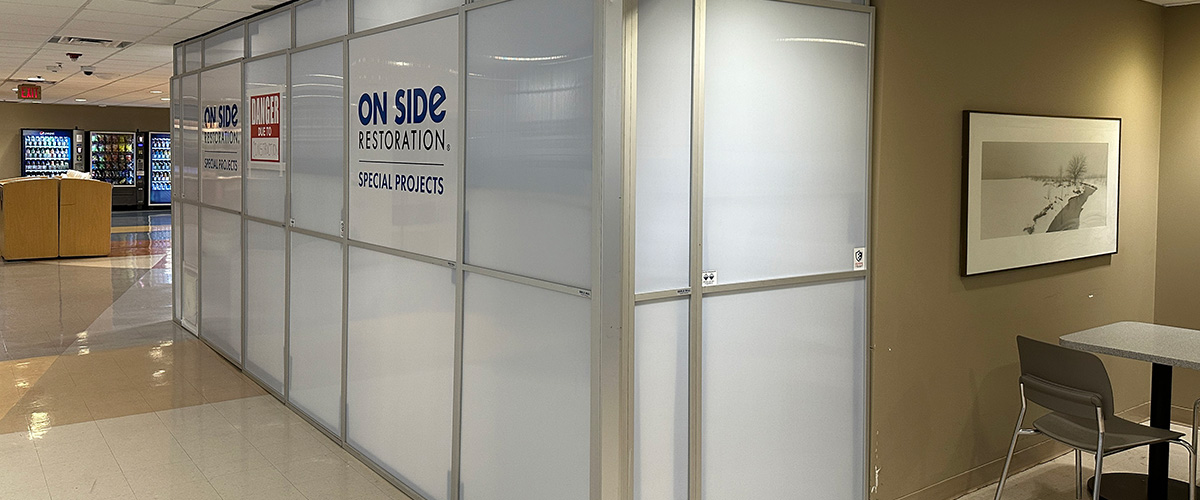
Emergency mitigation in public spaces is not simply about drying a building or removing damaged materials. It is about preserving operational continuity while reducing risk to the people using those facilities every day.
At On Side Restoration, proactive emergency response planning is a key part of helping public sector partners manage these risks before a loss occurs. Pre-planning allows facility teams and mitigation professionals to identify high-risk areas, establish containment strategies, define communication protocols, and plan safe circulation routes within the building.
Ian Newman, Executive, Client Solutions of On Side Restoration states, “When I work with our industry partners in the municipal and education sectors, it is understood that emergency planning saves time and money on a project and allows for less impact on those persons using these facilities.”
What Public Building Managers Should Consider Before an Emergency
For municipal facility teams, emergency preparedness should go beyond maintaining a vendor contact list or emergency binder. Effective preparation requires understanding how a building will function during a disruption.
Key considerations include:
- Which building systems are mission-critical and cannot go offline?
- Which areas could remain operational during mitigation work?
- Where could containment zones be safely established?
- How would occupants be rerouted during an emergency?
- Who is responsible for internal and external communication?
- Are procurement and emergency authorization processes clearly defined?
“Facility leaders should also ensure building documentation is current,” comments Newman. “Risk assessments should be reviewed regularly, and emergency response partners need to understand the operational requirements of the facility.”
In many cases, the speed and success of recovery depend less on the emergency itself and more on the decisions made before the incident ever occurs.
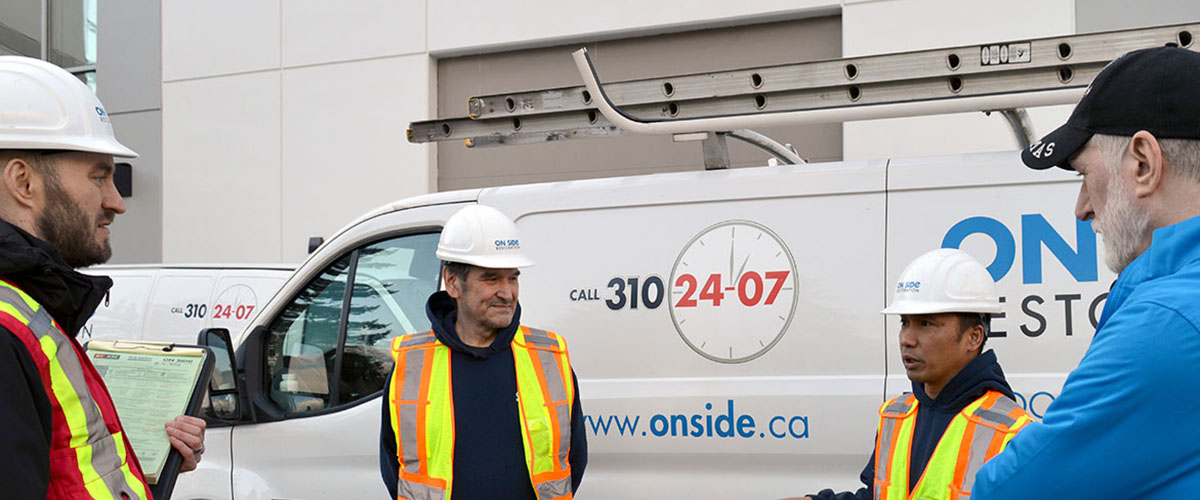
Moving from Reactive to Proactive – On Side’s Approach
In public buildings, emergency mitigation is not just about rapid response. It’s about preparation, coordination, and continuity — working within defined protocols and protecting the people who rely on these spaces every day.
The most resilient municipalities and public organizations are those that plan ahead, build strong response partnerships, and establish clear emergency protocols before a crisis occurs.
On Side Restoration works alongside municipalities, educational institutions, healthcare facilities, and other public sector organizations to provide valuable insights and additional resources to the emergency response planning process that reduce disruption, protect occupants, and accelerate recovery.
From pre-loss planning and risk assessments to emergency mitigation and full restoration, our goal is simple: help public sector partners respond with confidence when the unexpected happens.
To learn more about On Side Restoration’s proactive emergency response planning, call us at 1-888-663-6604 or email us at contactus@onside.ca.